
You as an ambitious football player only want one thing: TOP performance. To perform optimally one should optimise all factors. One of these is nutrition. In The BEST nutrition for football players I have already described what it takes to have an optimal diet for a football player. In this post I’m going to describe which supplements for football players to take to get your game to the next level. Grab your notebook and sit down, because you’re about to receive some crucial information!

1. Creatine
The first one on the list is creatine. This supplement is well researched and has a thick scientific base for its efficacy. It will most likely make you faster, stronger and more explosive as a football player. It can also have a positive effect in your gym workouts, resulting in more muscle mass and strength long term. My advice for any serious football player is to take creatine daily. A summary of the effcts and usage of creatine can be found in table 1.
| Effects1,2 | Improves sprint performance and explosiveness during football |
| Improves maximal strength during strength training | |
| Use | 5g/day. After 4 weeks of daily 5g intake effects should be noticable |
| 3-5g/day after the 4 week build-up period to maintain creatine levels in the body | |
| Side-effects | You might have some fluid retention in your body, potentially increasing your bodyweight slightly. |
| Extra | For a faster initial effect you could supplement 20g/day for 2 weeks, 4 intakes of 5g divided over the day. After 2 weeks same maintenance dose of 3-5g. |
2. Beta-Alanine
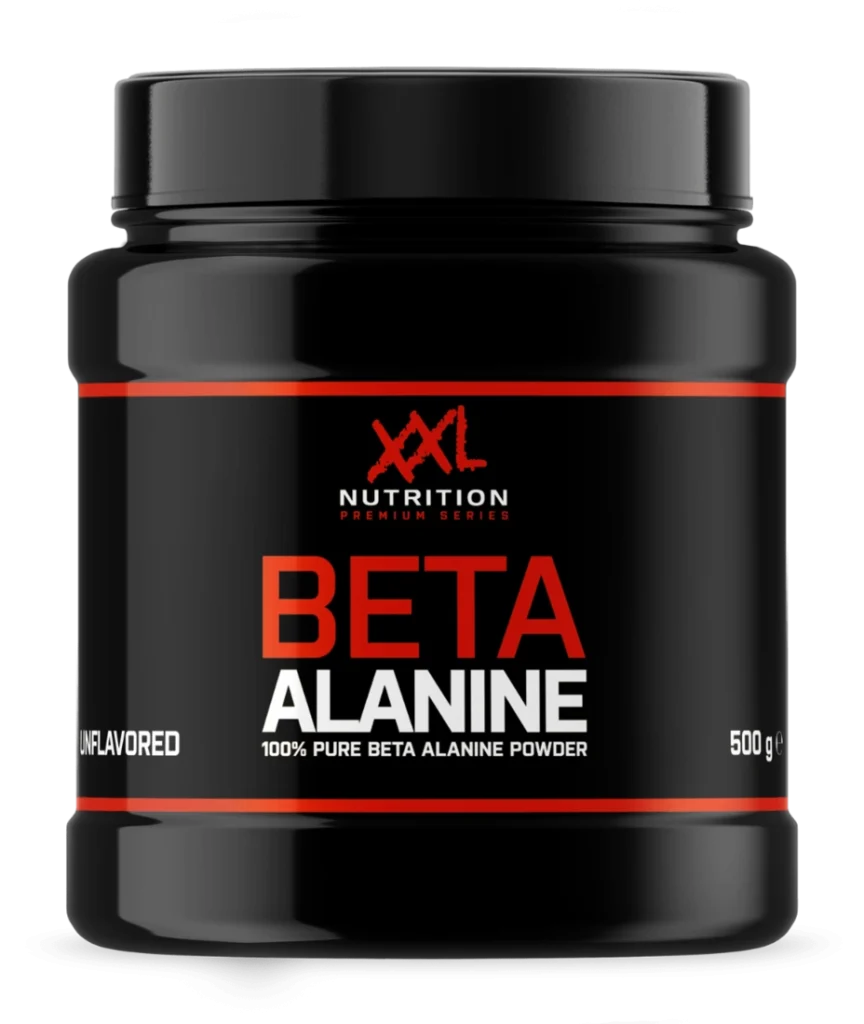
The second supplement on the list is Beta-Alanine. This supplement will (indirectly) delay the lactic acid build-up in the muscles. Therefore, the football player will be able to perform at high intensity on the pitch and in the gym a little bit longer. Therefore, while it can increase your performance on the pitch, it can also result in a little bit more gain in muscle mass due to improved gym workouts. A summary of Beta-Alanine is illustrated in table 2.
| Effects2 | Delays lactic acid build up in the muscles for high-intensity bouts during football. |
| Delays lactic acid build up in the muscles during higher duration strength training | |
| Use | 4-6g/day. After 2-4 weeks of daily intake the supplement starts to have its effect. |
| Side-effects | Can incur the feeling of a needle prick on the skin. This is NOT harmful. However, in case you find this annoying you could decide to divide the 4-6g over the day in smaller doses. |
| Extra | Easy to take-in along with creatine, for example before the strength or football training. |
3. Caffeine
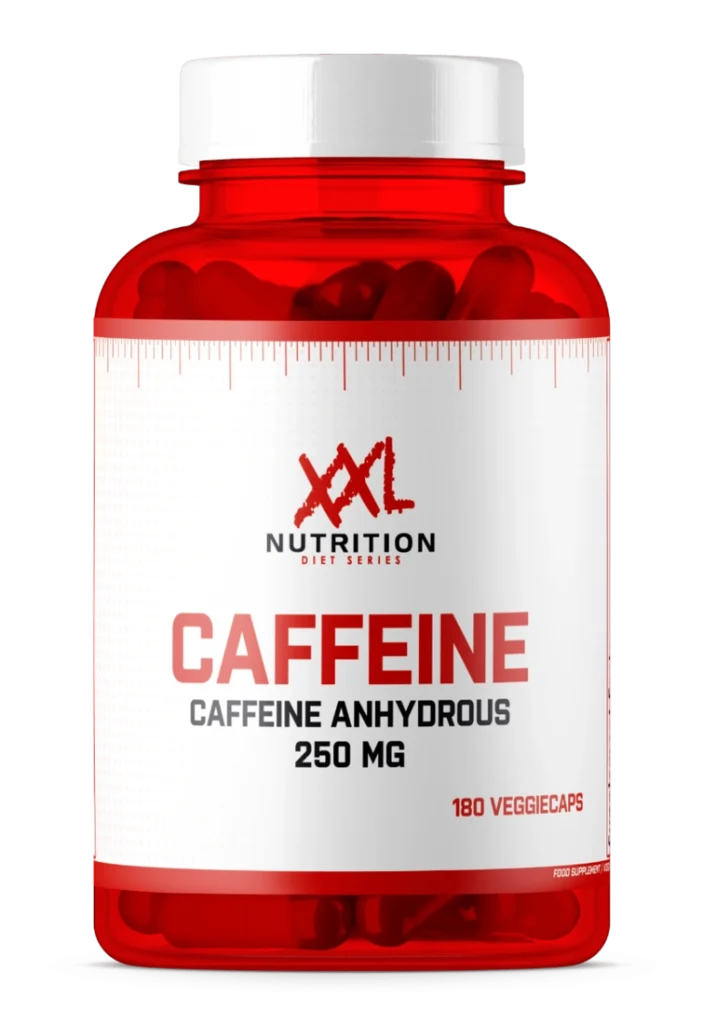
Many football players have consumed an energy drink pre-match. However, ta high amount of sugar and carbonic acid can cause stomach problems and cause irritation. Therefore, it is advised to use caffeine supplements instead. Supplementing the right amount can increase energy levels, concentration and maximal strength. These factors can improve your football game. A summary for caffeine can be found in table 3.
| Effects2 | Improves cognitive functioning during football and strength training |
| Improves skills during football | |
| Decrease fatigue during football and strength training | |
| Improves maximum strength during football and strength training | |
| Use | 3-6 mg/kg bodyweight. This would mean that a player who weighs 80kg should take in 240-480 mg. HOWEVER, be mindful when implementing caffeine and always start on a LOW dose (1-2mg/kg). |
| 45-60 min before kick-off | |
| Side-effects | Caffeine intake later during the day can interfere with your sleep quality. Therefore NEVER take caffeine within 6-8 hours preceding your bed time. |
| A caffeine intake that is too high can have multiple side-effects such as cramps, diarrhea and axiety. Therefore always start with a LOW dose. Despite research advising 3-6mg/kg, 1-2mg/kg should have enough effect and are a good point to start at. |
4. Carbohydrates
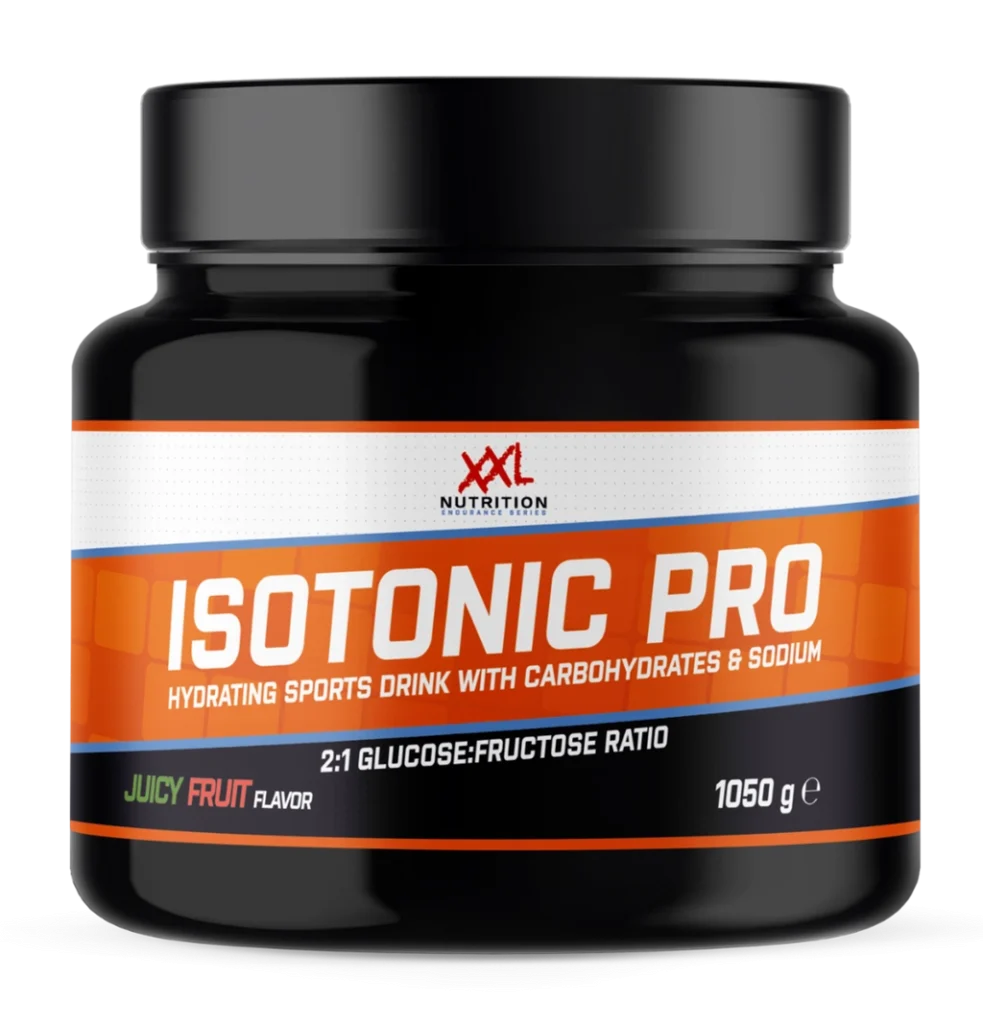
Carbohydrates in the form of an isotonic drink or gel are the most underrated supplement in football. Their use will result in an increase in energy, can delay dehydration and result in a boost in technique for passing, shooting and dribbling. It is advised to take one bout right after the warming-up, just before kick-off and another bout in half time. A full summary is illustrated in table 4.
| Effects2,3 | Improves agility and shooting, dribbling and passing technique |
| Decreases loss of concentration during football | |
| Improves energy capabilities during football | |
| Decreases fatigue during football | |
| Use | 30-60g fast carbohydrates in the form of an isotonic drink or gel right after warming-up and before kick-off. |
| 30-60g fast carbohydrates from a gel or isotonic drink during half time. | |
| Side-effects | Sometimes a high intake can cause GI tract problems. In case you would like to take in more than 30g per serving, make sure the carbohydrate source is in a 2:1 scale of glucose:fructose. If you would like to try 45-60g, make sure to practice this during training so your body can get used to it. |
| Carbohydrates are the easiest and cheapest, but also the best supplement to take for football players. Not only is it important to supplement carbohydrates around matches, a high carbohydrate intake in your general diet is important. For more information on your whole diet as a football players, please read the following article. |
Conclusion
These supplements for football players are must-use for ambitious football players. Despite this, they are often not, or incorrectly used. Implementing sufficient dietary and supplement strategies for football requires a lot of work. In case you have any questions, don’t hesitate to contact me. I can also help you bring your nutrition and exercise game to the next level with online coaching.
References
- Mielgo-Ayuso J, Calleja-Gonzalez J, Marqués-Jiménez D, Caballero-García A, Córdova A, Fernández-Lázaro D. Effects of Creatine Supplementation on Athletic Performance in Soccer Players: A Systematic Review and Meta-Analysis. Nutrients. 2019;11(4):757. Published 2019 Mar 31. doi:10.3390/nu11040757
- Oliveira CC, Ferreira D, Caetano C, et al. Nutrition and Supplementation in Soccer. Sports (Basel). 2017;5(2):28. Published 2017 May 12. doi:10.3390/sports5020028
- Collins J, Maughan RJ, Gleeson M, et al. UEFA expert group statement on nutrition in elite football. Current evidence to inform practical recommendations and guide future research. Br J Sports Med. 2021;55(8):416. doi:10.1136/bjsports-2019-101961