
Strength training for footballers remains to be an underestimated element, despite it being proven to make you a better football player! Implementing strength training improves your on-pitch strength, explosiveness and coordination.1 It also helps in preventing injuries.2 Today I’m going to take you through the basics of strength training for football players.
Basic strength training for footballers
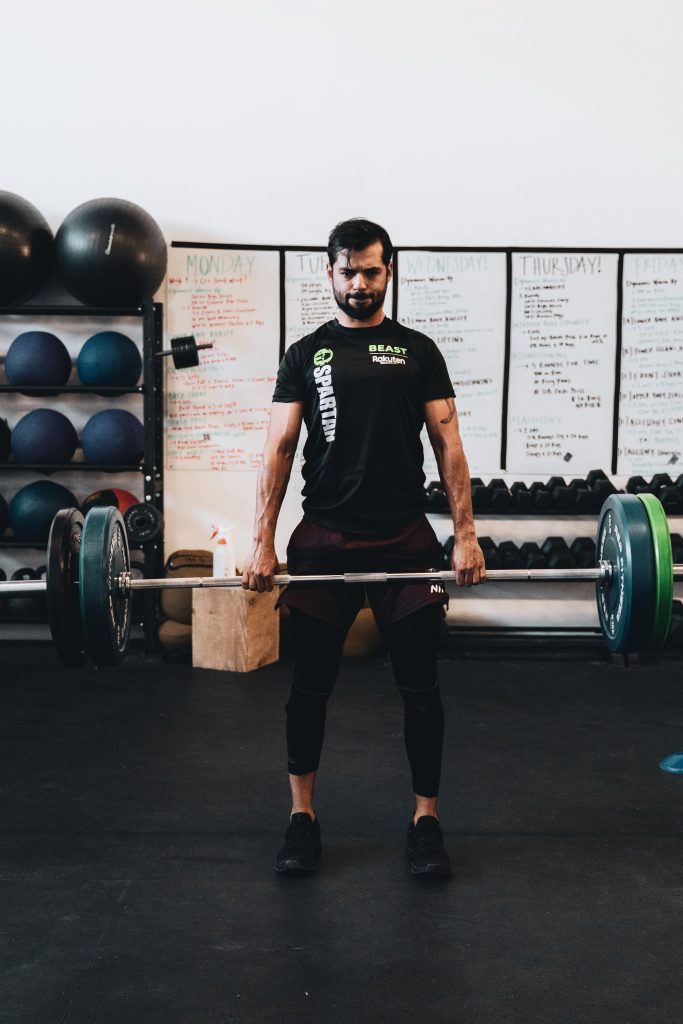
Even for footballers, it starts with the basics. These are your basic movements such as in exercises like squats, hip thrusts, deadlifts, lunges, bench presses, pull ups (or lat pulldowns) and rows. These build your fundamental basic strength in your whole body. I would advise any football player that has no prior experience with strength training to start practising these movements without weight. A good method is to use a wooden stick as a barbell imitation. Build strength through these compound exercises for your push, pull and leg muscles. Then add on the football specifics mentioned below.
Coordination
Football consists of specific motions that aren’t fully covered by just applying regular strength training. Therefore it is advised to implement specific coördination exercises that are aimed at these motions. The Frans Bosch method3 is often used as an underlying method. He mentions the use of attractors for football players. These are the following:
- Ankle stiffness
- Hamstrings (isometric and eccentric)
- Footplant from above
- Hip lock
- Abs / back straight
- Abs / back rotation
Try and implement these exercises additionally to your strength training program. An example of an exercise that induces a combination of ankle stiffness is the kettlebell single leg deadlift with a hip lock.
Plyometrics
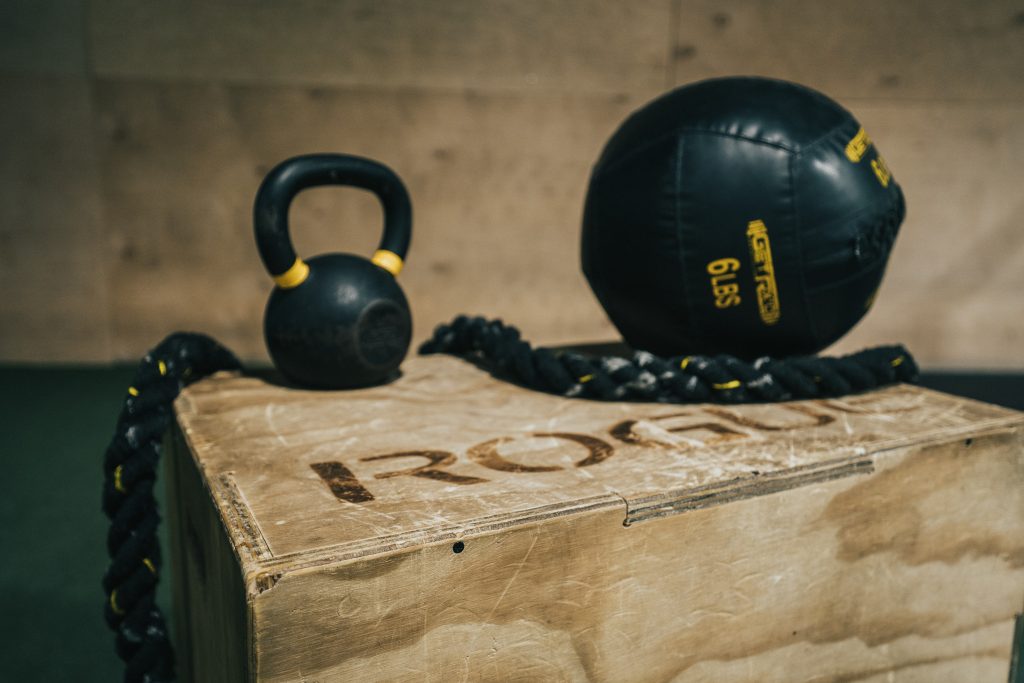
Lastly, there’s your plyometrics. These are crucial exercises that are necessary to maximise your performance on the pitch. These exercise improve your explosiveness, change of direction (COD) and coordination. You might have done some plyometric exercises in the past, such as performing on a speed ladder. Other forms of plyometrics can be exercises such as box jumps and drop jumps. Specific elements such as reaction time on the ground and the stretch reflex within the muscles and tendons can be trained this way.
Conclusion
Strength training for footballers should bring the three forementioned elements together. You;ve got your basic exercises as a fundament for general strength, mobility and hypertrophy, your coordination exercises to improve specific football motions and your plyometrics to improve your explosiveness and COD. Ideally all three are practiced weekly. However, this requires the ability to program well, because you don’t want to be sore on match day! Therefore it is important to design a good workout program. If you’re having trouble with this, don’t hesitate to contact me. I can also design a personalised training program based on your possibilities, training days and general experience [LINK].
References
- Pardos-Mainer E, Lozano D, Torrontegui-Duarte M, Cartón-Llorente A, Roso-Moliner A. Effects of Strength vs. Plyometric Training Programs on Vertical Jumping, Linear Sprint and Change of Direction Speed Performance in Female Soccer Players: A Systematic Review and Meta-Analysis. Int J Environ Res Public Health. 2021;18(2):401. Published 2021 Jan 6. doi:10.3390/ijerph18020401
- Beato M, Maroto-Izquierdo S, Turner AN, Bishop C. Implementing Strength Training Strategies for Injury Prevention in Soccer: Scientific Rationale and Methodological Recommendations. Int J Sports Physiol Perform. 2021;16(3):456-461. doi:10.1123/ijspp.2020-0862
- Bosch, F., & Cook, K. (2015). Strength training and coordination: an integrative approach. Rotterdam: 2010 Publishers.